Food & Regional Cuisine · Peru
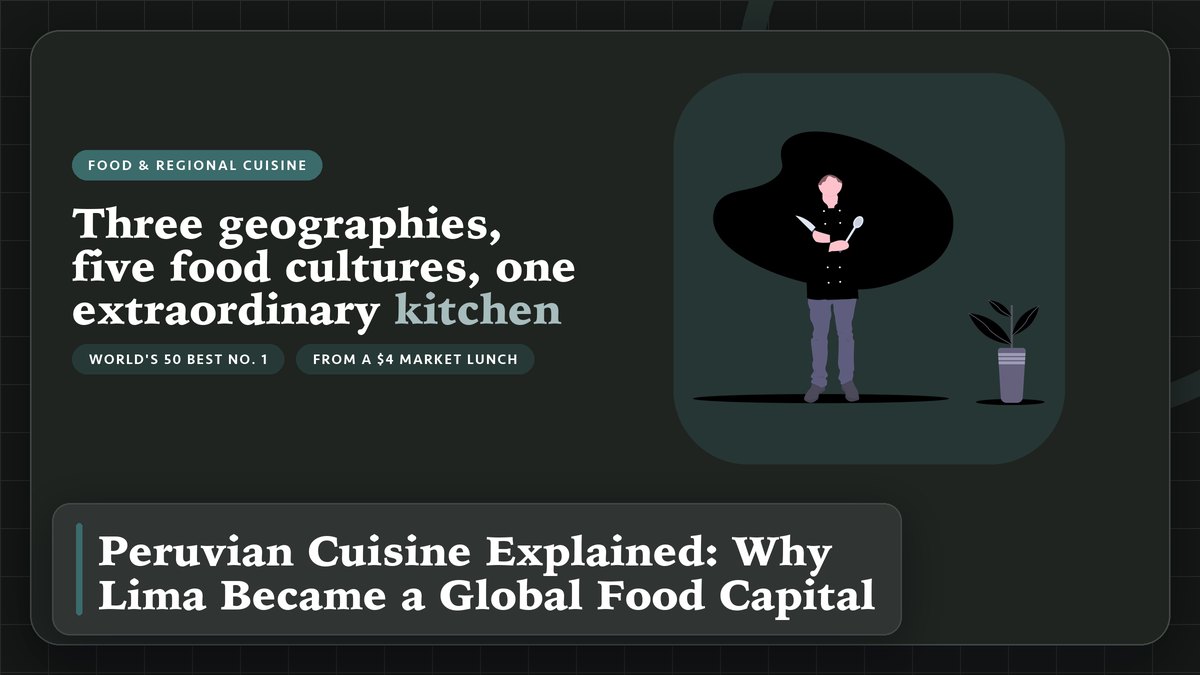
A desert coast, a mountain range, a rainforest, and five centuries of immigration walk into a kitchen. The result is the most decorated restaurant city on Earth — and, more importantly, a food culture you can eat your way through for a few dollars a plate.
In 2025, Lima’s Maido was named the best restaurant in the world, with Central, Kjolle and Mayta keeping it company near the top of the global lists. One city holding a position that Paris and Tokyo, for all their food-capital decades, never quite held. The rankings themselves (The World’s 50 Best maintains them) matter less than what they point at. Peruvian cuisine spent two decades moving from national pride to global phenomenon, and Lima is where you go to understand why.
But the tasting menus are only the visible peak. Look lower. The better story, and honestly the better trip, is the whole pyramid beneath them, the cevicherías and market stalls, the Chinese-Peruvian chifas and Japanese-Peruvian Nikkei houses, plus the picanterías of Arequipa and the jungle kitchens of Iquitos. I’d go so far as to say Peru is the only country where you can eat world-class food at every price point, including two dollars. Below is the explanation, then the eating strategy.
In this article
- The Explanation Three geographies, five immigrations
- The Canon What to eat, in rough order of importance
- The Eating Strategy By budget, because that’s what matters
- Beyond Lima The other food cities
- Practical Notes for the Food Traveller Stomach, season, bookings
- Learning to Cook It The souvenir that keeps working
- Neighbourhood Eating in Lima A working map
- A Four-Day Eating Itinerary If food is the reason you’re going
- The Point, Restated
- Drinking Peru The other half of the table
The Explanation Three geographies, five immigrations
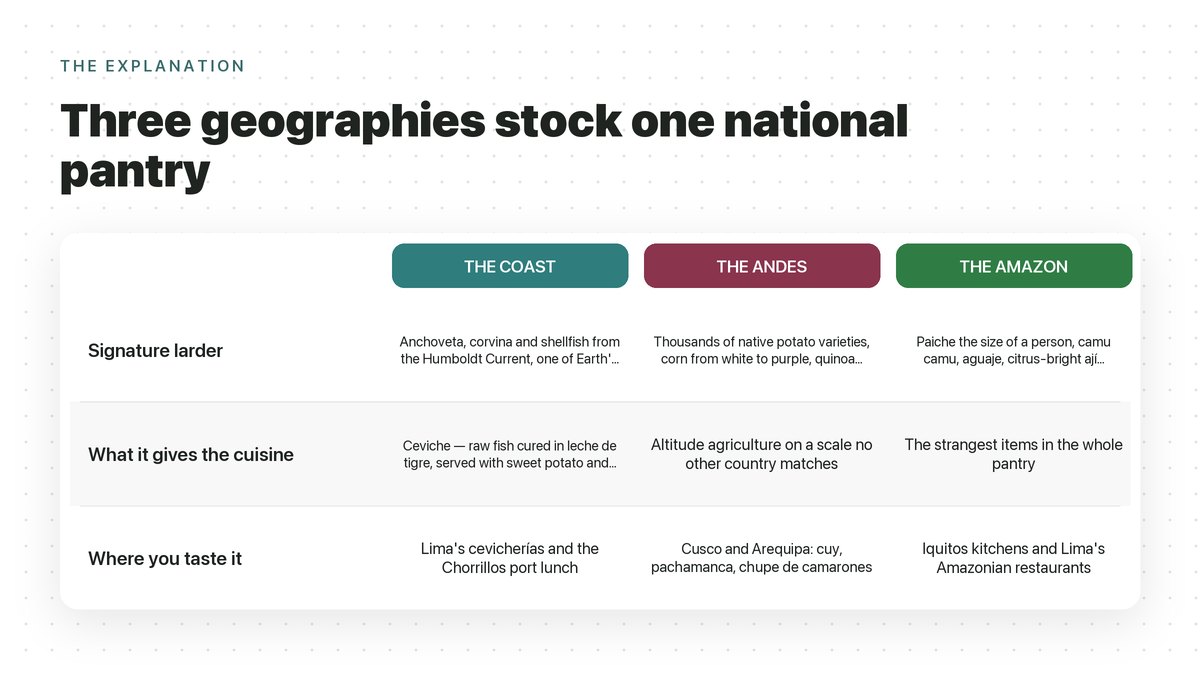
Start with the map. Peru packs three wildly different larders into a single day’s drive. Along the coast, the Humboldt Current pushes up anchoveta, corvina and shellfish from one of the richest fisheries anywhere, which is what makes ceviche possible. The Andes add altitude agriculture on a scale no other country matches, thousands of native potato varieties (Peru is the crop’s homeland), corn running from white to purple, quinoa, kiwicha, ají peppers that range from fruity to ferocious. The Amazon supplies the strangest items in the whole pantry. Paiche, an arapaima that grows to the size of a person. Camu camu, aguaje, the citrusy ají charapita. No other cuisine starts with this raw material.
Now the people. It happened in layers. Indigenous Andean cooking absorbed Spanish ingredients and techniques after 1532. On the coast, enslaved Africans left a permanent mark, because anticuchos (beef heart grilled on skewers) and tacu tacu are Afro-Peruvian dishes through and through. Chinese indentured workers arrived in the nineteenth century, and their wok logic married local produce into chifa, Peruvian-Chinese food that sits so deep in the national identity that lomo saltado, beef tossed with soy, tomato and fries, now counts as a creole standard. Japanese migrants brought the same precision to raw seafood that the Chinese brought to the wok, and out of that marriage came Nikkei, which I’d argue sharpened ceviche itself. Later came the Italians, which is why pasta turns up at Peruvian family lunches. Five food cultures, one extraordinary pantry, a century and a half of intermarriage. That’s the recipe, more or less.
And the chefs who sold it to the world. Gastón Acurio is the figure everything turns on. Trained in Paris, he came home in the 1990s and made the then-outlandish claim that Peruvian food deserved a seat at the world’s fine-dining table, then spent decades building the proof, in restaurants, festivals and a whole bench of protégés. He was right. Virgilio Martínez pushed the idea further at Central with a tasting menu built around ecosystems and altitudes, and his wife Pía León runs Kjolle. Mitsuharu Tsumura’s Maido took Nikkei to its highest polish. The summit of this pyramid is real enough, but it stands on millions of ordinary lunch counters, which is exactly what the rankings fail to see and what you shouldn’t miss.
The Canon What to eat, in rough order of importance
Ceviche comes first, and it isn’t close. Raw fish cured in leche de tigre, a marinade of lime, ají, red onion and salt, served beside sweet potato and choclo, the giant corn. The rules matter more than the recipe. It’s lunch food, because the catch comes in that morning, and any cevichería still open at night is one I’d walk straight past. Order the simple version first, plain fish rather than a seafood medley. And the leche de tigre left in the bowl is a drink, so pick it up and finish it.
Then the chifa canon. Lomo saltado, obviously. Chaufa, a fried rice that puts most fried rice I’ve had to shame. And a proper chifa Sunday lunch, which in Lima carries the weight of a religious obligation, families queueing for their regular tables the way other cities queue for church.
Anticuchos belong to the grill and the street, beef heart marinated in ají panca and vinegar, charred hard over coals, with the best versions coming off carts and specialist anticucherías like the storied Grimanesa in Miraflores, the one every Limeño can name.
Up in the Andes the table changes completely. In Cusco and Arequipa you’ll eat cuy, and my advice is to order it al horno, roasted, at a place that does nothing else, judging it as the delicacy locals consider it rather than as a dare. Chupe de camarones, Arequipa’s great river-shrimp chowder, is worth the trip south by itself, and adobo belongs to Sunday morning. And pachamanca, meat and tubers buried with hot stones in an earth oven, is the Andes’ oldest feast and still the one I’d pick over any tasting menu.
The Amazon chapter. Juane, rice and chicken folded into bijao leaves. Paiche in whatever preparation the kitchen offers. Everything spiked with ají charapita, the little pepper that burns citrus-bright, best eaten in Lima’s Amazonian restaurants or, better, in Iquitos itself.
Dessert and drink. Save room. Picarones, squash-and-sweet-potato doughnuts in syrup, lead the sweets. Suspiro a la limeña is the pudding Lima argues over, and the pisco sour is a matter of national identity. Order it, enjoy it, and leave the Chilean counterclaim unmentioned at the table. Wash lunch down with chicha morada, purple corn simmered with pineapple and cinnamon, and if you’re in the Andes, treat chicha de jora with respect, it’s the fermented corn beer the region has drunk at gatherings for a millennium.
The Eating Strategy By budget, because that’s what matters
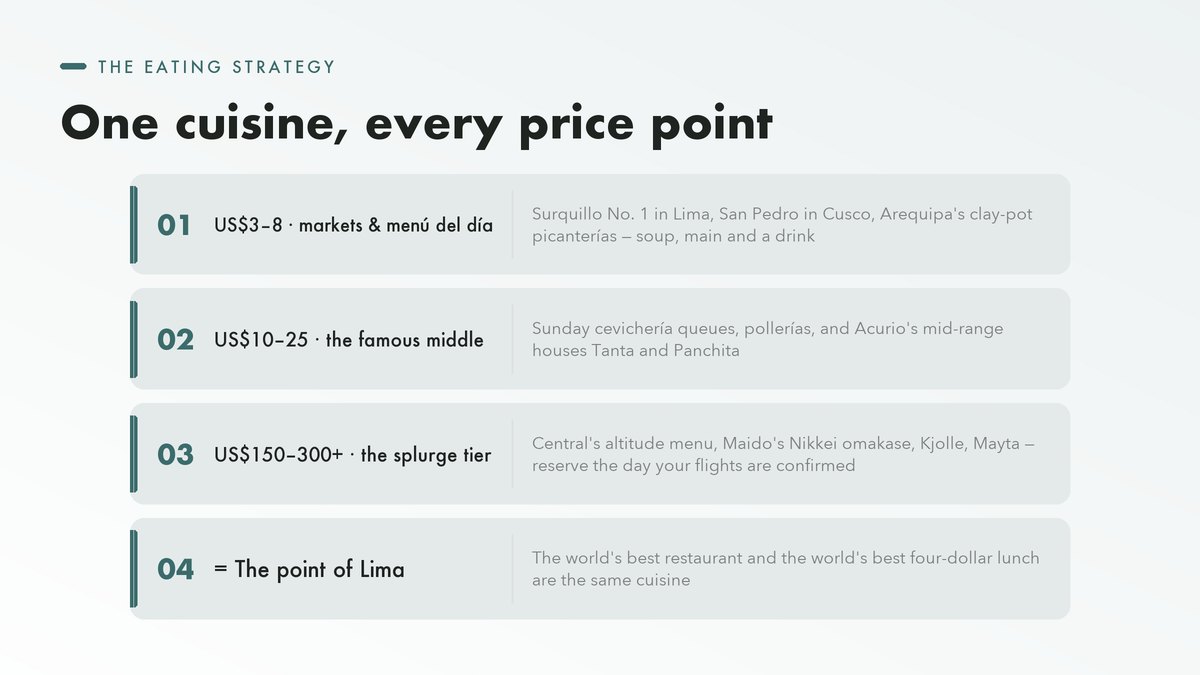
At three to eight dollars a plate, you eat at markets and menú del día counters. Lima’s mercados do the heavy lifting, Surquillo No. 1 is the one food people make a pilgrimage to, and its stall kitchens turn out ceviche, sudado and arroz con mariscos for pocket change. The fixed-price menú, soup, main and a drink, is how Peru itself eats lunch and probably the best food value in South America. Cusco has the San Pedro market for the same trick, and Arequipa answers with the picanterías, old lunch houses where the day’s stews arrive at the table still in their clay pots. A few of these houses are centuries old.
Ten to twenty-five dollars buys you the famous middle. The cevicherías with queues of Limeño families at 1 p.m. on a Sunday. Pollerías doing the rotisserie chicken Peruvians rate above half the national canon. The Acurio-group mid-range houses, Tanta and Panchita, plating creole classics at prices that feel like a clerical error.
And the splurge tier, which wants booking months out. Plan early. Central’s altitude menu, Maido’s Nikkei progression in the omakase mold, Kjolle, Mayta. Figure US$150 to 300-plus per head with drinks, and reserve the day your flights are confirmed, because tables go that fast. By the standards of world fine dining, the prices stay almost embarrassingly fair. If you only do one, my pick is Maido or Central, and if all you can get is a bar seat or the lunch service, take it and don’t look back.
“Peru is the only country where the world’s best restaurant and the world’s best $4 lunch are the same cuisine. Eat at both ends.”
Beyond Lima The other food cities
Arequipa will tell you, with some justification, that Peru’s deepest food culture lives in its picanterías, a tradition recognised as national heritage, with dishes like rocoto relleno and adobo treated as local religions. They mean it. Cusco feeds you the Andean table, cuy, pachamanca, and the chicherías you spot by the red plastic bag on a pole, and its restaurant scene has matured enormously over the past decade or so. Iquitos, which you can reach only by air or boat, is the Amazon’s kitchen and the most adventurous eating in the country. Up north, Trujillo and Chiclayo claim the country’s finest ceviche tradition plus their own canon of cabrito and seco de chabelo, and they do it all virtually tourist-free.
Practical Notes for the Food Traveller Stomach, season, bookings
About your stomach. The rule set that works is short. Eat ceviche and raw fish only at busy, reputable places, and only at lunch. Eat street food that’s cooked in front of you and arrives still scalding. Outside the top establishments, stick to bottled or treated water, and go easy for the first 48 hours while your gut recalibrates. Get your cuy and your anticuchos from established specialists rather than anonymous carts. Follow that and most visitors eat adventurously and stay healthy.
Altitude changes your appetite. At 3,400 meters in Cusco, digestion slows and heavy food and alcohol hit harder on day one, so eat light, drink more water than feels necessary, and hold the pisco flight until about day three.
Bookings work differently by tier. The top tables take reservations on their websites months in advance, the cevicherías take none at all and expect you in the queue before 1 p.m., and the markets wind down by late afternoon. Sunday is the great eating day, though many of the famous places close Sunday night and all day Monday, so plan around that.
Timing a trip around food is worth the effort. September brings Mistura, Lima’s enormous food festival, whenever it runs, and the coastal summer from December to April is peak ceviche weather. Peru’s official tourism portal, peru.travel, keeps track of festival dates and the regional food routes.
Learning to Cook It The souvenir that keeps working
Lima and Cusco both run excellent cooking classes, and for anyone travelling primarily to eat, they’re the best half-day purchase in the country. The usual format runs US$40 to 80 and starts with a market tour, which is where the real education happens, the ají taxonomy, the potato varieties, the vendors who’ve supplied the same chefs for decades. Then comes a kitchen session where you make ceviche, causa and a pisco sour, and you go home with recipes that actually survive a foreign kitchen. Book the classes that include the market, because a class without one skips the best part of the whole thing. Serious cooks can go much further, multi-day culinary programmes in Lima, Nikkei technique workshops, and pachamanca days in the Sacred Valley where you help build the earth oven yourself. The deeper payoff is calibration. Once you’ve cut the fish yourself and watched what a ninety-second cure does to it, you can walk into any cevichería anywhere and read its quality at a glance for the rest of your life.
Neighbourhood Eating in Lima A working map
The city sprawls, and where you sleep shapes what you eat. Miraflores holds the famous mid-range places and several top-tier tables, along with the full tourist apparatus to match, which is fine, but push beyond it. Barranco, the old bohemian quarter between the murals and the colonial casonas, is where Lima’s young chefs open the rooms everyone will be talking about in two years. Surquillo is the market district for grazing seriously, and the centro histórico rewards a weekday lunch at century-old cevicherías and chifas around the mercado, eaten standing at counters next to office workers. San Isidro is the polished business end, while down in Chorrillos, the fishing district at the city’s south end, Limeños themselves go for the definitive ceviche lunch, the day’s catch served in the port with the pelicans supervising. I’d pace the visit with one splurge dinner booked far in advance, lunches at the markets and cevicherías, and a single long Sunday chifa. The taxis between districts cost very little, so the only real constraint is your own appetite.
A Four-Day Eating Itinerary If food is the reason you’re going
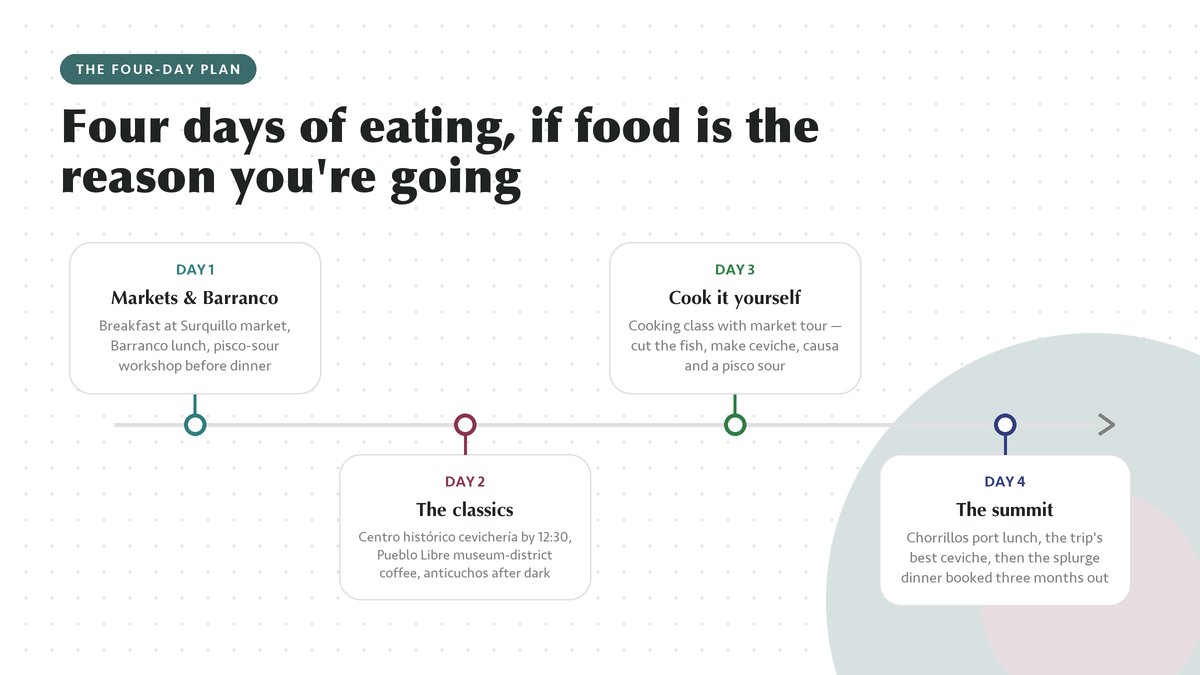
Day one starts with breakfast at the Surquillo market, a Barranco lunch, and a pisco-sour workshop before dinner in the same district. Day two means a centro histórico lunch at a classic cevichería, arriving by 12:30, then coffee in Pueblo Libre’s museum district and anticuchos once it gets dark. Day three is the cooking class with its market tour, and I’d keep the evening empty because you’ll want it. Day four takes you to Chorrillos for the port lunch, the ceviche summit of the whole trip, followed by the splurge dinner you booked three months ago. After that, if the route allows, push on to Arequipa for the picantería chapter, since Lima may be the capital of Peruvian food but it isn’t the whole geography.
The Point, Restated
Most food capitals gatekeep. The great meals sit behind months of waiting lists and three-figure checks, reserved for the few who can book and can pay. Lima’s trick is that it opened the same cuisine to everyone, from the most decorated tasting menu on the planet down to a market counter where the ceviche costs four dollars and the cook has plated it ten thousand times. Come for Central if you can get the table, come for the market stall even if you can’t, and you’ll leave understanding why a country that fed empires on potatoes finally collected its culinary due. Peruvians, asked about their food, won’t even brag. They just invite you to lunch.
Drinking Peru The other half of the table
Start with pisco, and start it the right way. The pisco sour is the national handshake, pisco, lime, syrup, egg white and bitters, and a well-made one in a Lima bar at dusk belongs on the short list of the hemisphere’s great small pleasures. Two rules apply. First, pace yourself, because the foam hides the strength and the second glass lands before the first one issues any warning. Second, diplomacy. Chile also claims pisco, both countries make it, the argument runs centuries deep, and no traveller has ever won it, so the correct position is appreciative silence. If you want the purist move, ask for a bottle of quebranta or italia served neat, since pisco is a proper grape brandy and the people who love it most in Peru drink it unmixed.
Then the older drinks, the ones the conquest never managed to replace. Chicha de jora, lightly alcoholic, pre-Inca, brewed from germinated maize, survives in the Sacred Valley’s chicherías, which announce themselves with a red plastic bag on a pole above the door, quite possibly the oldest open sign in the Americas. You drink it from a gourd, you pour the first sip on the ground for the Pachamama, and you hold your questions about the traditional brewing method until after you’ve finished. Its gentler sister chicha morada skips the alcohol, tastes of purple corn, pineapple and cinnamon, and arrives with lunch everywhere, same family, none of the baggage. Up in the highlands maté de coca is the altitude ritual, legal, gentle, and woven into every hotel lobby from Cusco to Puno.
The modern layer has caught up, too. Barranco has built a genuine craft-beer and cocktail scene, the city’s bars now rank with its restaurants, and Peruvian coffee, which left the country in bulk for decades while locals drank instant, has finally come home to a crop of origin-roaster cafés across Miraflores. And then there’s Inca Kola, fluorescent yellow, bubble-gum sweet, and reportedly the only national soft drink anywhere that outsells Coca-Cola in its home market. Order one with something fried and you’ll grasp a small national pride, though nobody’s asking you to order a second.
If the pisco bug bites, the source lies south of Lima. The Ica valley sits roughly three to four hours away by road, its bodegas scattered among the vines, the tasting rooms pouring everything from quebranta’s muscle to italia’s perfume. March is the month to aim for, the vendimia, the grape-harvest festival, puts the whole region in party mode while the pressing runs, though any month works for the bodega circuit, which pairs unnervingly well with the Huacachina oasis next door. Hire the driver. Take the tour. The tasting pours run generous, the roads are fast, and the sensible approach to pisco country matches wine country everywhere, someone else does the steering.
Restaurant rankings referenced reflect The World’s 50 Best lists as of 2025; reservations, prices and festival dates change — book top tables the moment your travel dates are set. Food-safety guidance is general practice, not medical advice. This article contains no affiliate links. All outbound links checked live in August 2026.